
If you’ve ever thought about bringing your web app idea to life — whether it’s an eCommerce store, a social platform, or a SaaS product — one question definitely comes up first:
“How much will it cost to build a full-stack web application?”
It’s a fair question — and also a tricky one because the web application development cost depends on many factors. Everything from the complexity of your app, the design, the tech stack, and the location of your developers affects the final cost.
But don’t worry! In this blog, we’ll break things down in a simple and transparent way so you can clearly understand what goes into building a web app — and how much it may cost you.
What Is a Full-Stack Web Application?
Before we jump into costs, let’s get clear on what a full-stack web application means.
A full-stack web application is one that includes both:
- Frontend: The part users see and interact with (like buttons, forms, and pages).
- Backend: The behind-the-scenes logic that powers your app — like databases, servers, and APIs.
So, when you hire a Full-Stack Developer, you’re essentially hiring someone who can handle both sides of development — creating the user interface and also building the technical engine that runs it. This makes full-stack developers extremely valuable because they reduce the need to hire separate frontend and backend teams.
What’s Included in Web App Development?
Before talking about numbers, it’s important to know what’s actually included when you pay for web application development. Many people assume it’s just about coding, but in reality, it involves several interconnected stages — each one equally important for your app’s success.
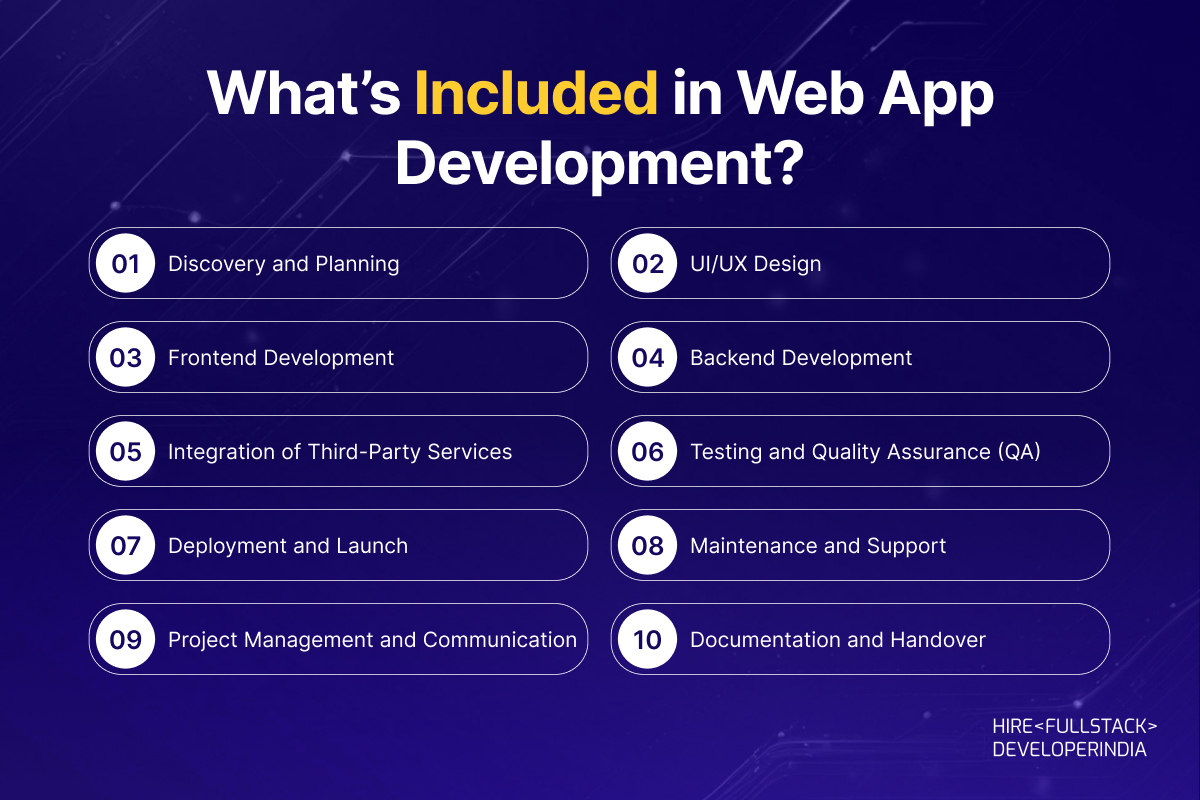
Here’s what’s typically covered in a full-stack web app development project:
1. Discovery and Planning
Every successful project begins with understanding your idea. In this stage, developers or the project manager will:
- Discuss your business goals and target audience
- Analyze competitors and similar apps
- Define the app’s core features and functionality
- Prepare a project roadmap, timeline, and cost estimate
This phase helps everyone stay on the same page and sets a clear direction before development begins.
2. UI/UX Design
Once your idea is clear, the design process starts. The UI (User Interface) focuses on how the app looks, while the UX (User Experience) focuses on how users interact with it.
Designers will:
- Create wireframes and mockups
- Choose color palettes, typography, and layout styles
- Build a responsive design that works across all screen sizes
- Ensure the app feels intuitive, simple, and visually engaging
A great design not only attracts users but also keeps them coming back.
3. Frontend Development
This is where design turns into reality — the visible part users see on the screen. Frontend developers use technologies like HTML, CSS, JavaScript, and frameworks such as React, Angular, or Vue.js to build the user interface. Key tasks include:
- Building web pages and navigation flow
- Connecting buttons, forms, and features to real functionality
- Ensuring everything is responsive and mobile-friendly
- Optimizing performance for faster loading speeds
In short, the frontend brings your design to life.
4. Backend Development
While the frontend is what users see, the backend is what makes it work.
It’s the engine behind your web app — managing logic, data, and communication between the user and the server.
Backend developers handle:
- Server setup and configuration
- Database design and management (MySQL, MongoDB, PostgreSQL, etc.)
- Building APIs for data exchange
- Implementing business logic and user authentication
- Ensuring security, speed, and scalability
Together, the backend and frontend form the core of full-stack web development.
5. Integration of Third-Party Services
Modern web apps often connect with other services to enhance functionality — like payment gateways, maps, or social logins.
Developers integrate these APIs safely and smoothly to ensure seamless user experiences.
Examples include:
- PayPal, Stripe, or Razorpay for payments
- Google Maps for location features
- Twilio for SMS or OTP verification
- Firebase or AWS for notifications and storage
Each integration adds value but also affects your overall web application development cost.
6. Testing and Quality Assurance (QA)
No web app should go live without testing. QA engineers test every feature to make sure the app runs smoothly, without bugs or glitches. They perform:
- Functional testing (do all features work correctly?)
- Compatibility testing (does it work on all browsers/devices?)
- Security testing (is user data safe?)
- Performance testing (is it fast and stable under load?)
Testing ensures your app is reliable and ready for real users.
7. Deployment and Launch
Once everything is tested and approved, your web app is deployed to a live server or cloud platform such as AWS, Azure, or Google Cloud. Developers handle:
- Setting up the production environment
- Linking your domain name and SSL certificate
- Configuring databases and backups
- Monitoring performance after launch
This is the exciting moment when your app finally goes public!
8. Maintenance and Support
Web app development doesn’t end at launch.
You’ll need ongoing support to keep your app updated, secure, and performing well.
This includes:
- Fixing bugs or performance issues
- Updating frameworks or dependencies
- Adding new features based on user feedback
- Monitoring uptime and server health
Most companies charge annual or monthly maintenance fees (usually around 15–25% of your initial project cost).
9. Project Management and Communication
Throughout the entire process, project managers ensure smooth communication between you and the development team. They track progress, manage tasks, and make sure deadlines and budgets stay on target. Good project management can save you a lot of time, confusion, and unnecessary expenses.
10. Documentation and Handover
Before wrapping up, the team prepares detailed documentation — explaining how your web app is structured, how to maintain it, and how to make updates in the future.
You also receive:
- Source code and access credentials
- Setup instructions
- API documentation (if applicable)
This final handover gives you complete ownership and transparency.
Web app development isn’t just coding — it’s a complete process involving strategy, design, development, testing, and post-launch support. Knowing what’s included helps you understand exactly where your backend and frontend development cost goes — and ensures you get full value for your investment.
Why You Should Know the Cost Before Starting
Building a web app is a serious investment. Whether you’re a startup founder, small business owner, or a tech entrepreneur, understanding the cost to build a full-stack web application is one of the smartest things you can do before jumping in.
When you have a clear idea of the financial side, you can make better decisions at every stage of the journey. Here’s why it matters so much:
- Plan your budget wisely: Knowing the rough cost in advance helps you allocate funds for design, development, testing, hosting, and marketing — without sudden surprises later.
- Choose the right tech stack: Some technologies may cost more to develop or maintain than others. Understanding pricing early helps you pick tools that balance quality and affordability.
- Avoid unnecessary expenses: A well-planned budget prevents overspending on features you don’t really need in the first version of your app. You can always scale later as your user base grows.
- Set realistic expectations: Knowing the estimated time and cost helps you plan your launch timeline and communicate clearly with your development team or investors.
Also, when you understand how costs are structured, you’ll find it easier to compare proposals from different developers or agencies. You’ll know what’s fair, what’s inflated, and where you can negotiate.
In short, having a solid grasp of your web application development cost keeps your project organized, efficient, and financially sound from the start. Now, let’s get into the numbers and the key cost factors.
Factors That Affect Web Application Development Cost
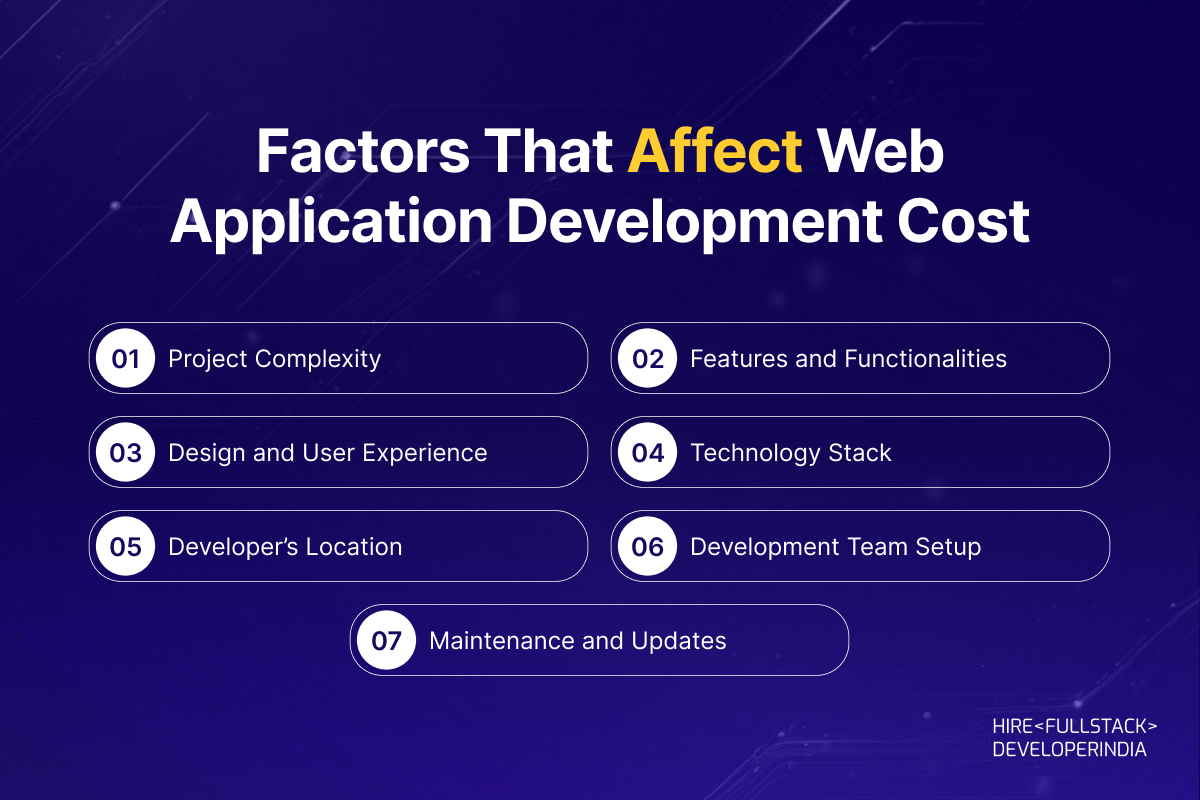
There’s no single answer to how much a web app costs — but we can identify what drives the cost up or down. Here are the most important factors:
1. Project Complexity
This is the biggest cost driver.
- Simple web apps (like a basic company website or a portfolio) need limited functionality — forms, basic navigation, and static pages.
Cost: $5,000 – $15,000 - Medium-complexity apps (like booking platforms, content management systems, or eCommerce stores) need database integration, user login, and payment gateways.
Cost: $15,000 – $50,000 - High-complexity apps (like SaaS platforms, marketplaces, or social networks) involve complex logic, real-time updates, multiple APIs, and high security.
Cost: $50,000 – $150,000+
The more complex your app, the higher the average cost to build a web app.
2. Features and Functionalities
Each feature adds more development hours and cost. Here’s a quick breakdown of what popular features may cost:
The number and complexity of features directly influence your web application development cost.
3. Design and User Experience
A well-designed app isn’t just about looks — it’s about how smoothly users can interact with it.
Design includes:
- Wireframing
- UI/UX design
- Responsive layouts for all devices
- Branding elements (colors, logos, typography)
If you choose a custom UI/UX, expect to spend more than a ready-made design.
Design cost range: $2,000 – $20,000+ depending on complexity.
4. Technology Stack
Your tech stack is like your app’s toolkit — it includes programming languages, frameworks, and databases used to build it.
For example:
- Frontend: React, Angular, or Vue.js
- Backend: Node.js, Django, Laravel, or Ruby on Rails
- Database: MySQL, MongoDB, PostgreSQL
- Cloud Hosting: AWS, Google Cloud, Azure
Modern frameworks may speed up development (and save money), but some technologies may require specialized developers, which can raise your backend and frontend development cost.
5. Developer’s Location
Where your developers are based plays a major role in pricing. The full-stack developer hourly rate varies drastically across regions:
Hiring from regions like India is often a smart choice for startups — because you can get top-quality developers at almost one-third the cost compared to the US.
6. Development Team Setup
You can either hire a freelancer, a dedicated in-house team, or work with a Full-Stack Development Company.
Each option has a different cost structure:
Working with a development company is often the best choice for businesses that want end-to-end project management — from idea to launch — without dealing with multiple vendors.
7. Maintenance and Updates
Many forget that costs don’t end once the app is live.
You’ll need:
- Regular updates
- Security patches
- Server and hosting costs
- Bug fixes
- New feature integrations
Maintenance cost: Around 15%–25% of the initial development cost per year.
So, if your web app costs $30,000 to build, expect around $4,500–$7,500 per year in maintenance.
Breaking Down Backend and Frontend Development Cost
Let’s look at how much each part of a full-stack web app costs individually.
Frontend Development Cost
The frontend is what users see and interact with — it includes everything from layout and navigation to forms and animations.
Frontend developers use frameworks like React, Angular, or Vue.js to build a smooth and responsive interface.
Average Cost:
- Simple interface: $3,000 – $8,000
- Medium complexity: $8,000 – $20,000
- Advanced UI with animations: $20,000 – $40,000+
Factors that increase cost:
- Custom UI design
- Mobile responsiveness
- Interactive elements (sliders, pop-ups, animations)
Backend Development Cost
The backend is the backbone of your web app — it handles user data, authentication, databases, and integrations with other services.
Average Cost:
- Basic backend: $5,000 – $15,000
- Complex backend: $15,000 – $40,000+
Backend developers use Node.js, Python (Django/Flask), Ruby on Rails, Java, or PHP frameworks like Laravel.
Factors that impact backend cost:
- Database setup and size
- Third-party API integration
- Cloud infrastructure
- Scalability and performance requirements
Together, backend and frontend development form the core of your full-stack web app — and their combined cost often takes up 70–80% of the total budget.
Additional Costs You Should Consider
Apart from development, there are a few hidden or additional expenses you should plan for:
These costs may seem small individually, but they add up — so including them in your initial budget helps you avoid surprises later.
Average Cost to Build a Web App (By Type)
Let’s look at rough estimates for different kinds of web apps:
Remember — these are average industry estimates. Actual costs can vary depending on your developer’s region, project complexity, and chosen tech stack.
Full-Stack Developer Hourly Rate Comparison
If you’re planning to hire on an hourly basis, here’s a quick comparison of full-stack developer hourly rates by region:
For startups and small businesses, hiring dedicated developers from India is often the most cost-effective choice — you get the same level of expertise but at a much lower cost.
How to Reduce Your Web Application Development Cost
If you’re on a tight budget but don’t want to compromise on quality, here are some practical tips:
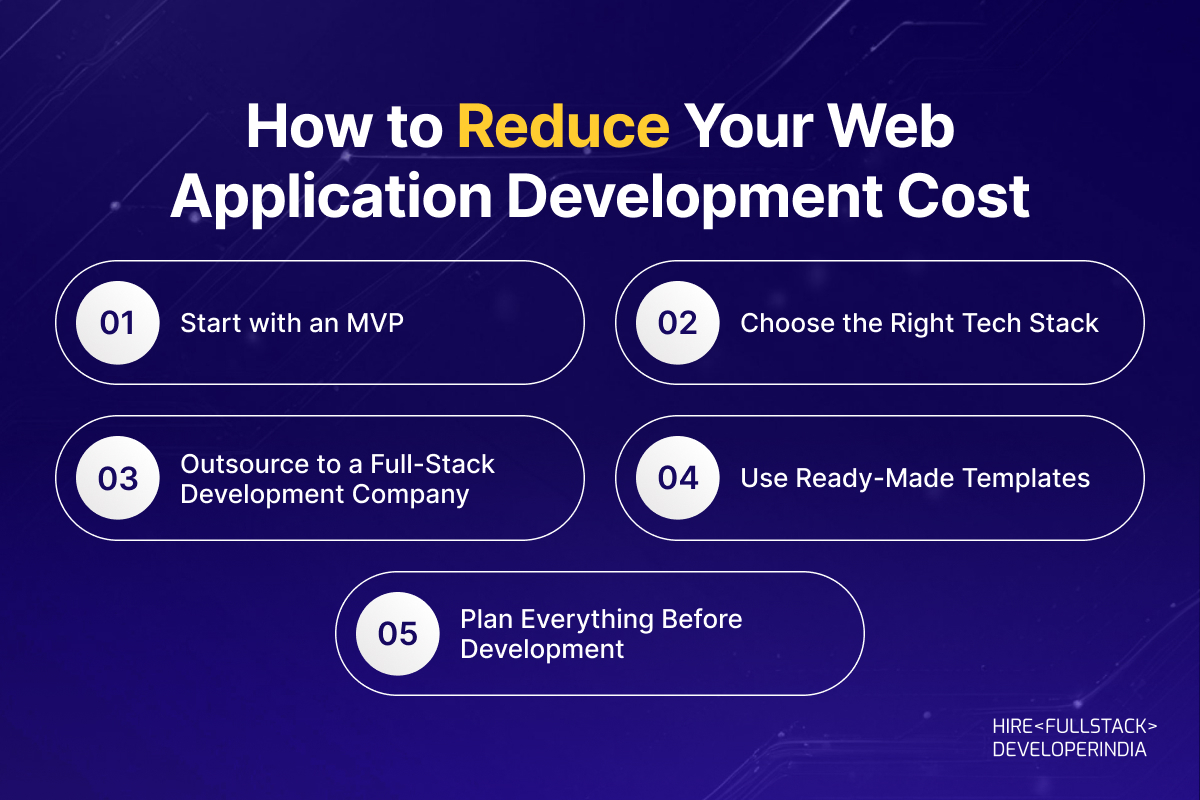
1. Start with an MVP
Build a Minimum Viable Product (MVP) first — a basic version of your app with only the essential features. You can test it with real users and add more functionality later. This approach saves money and helps you validate your idea faster.
2. Choose the Right Tech Stack
Go for technologies that are scalable and widely supported.
For example, React + Node.js is a great combination for most web apps. It’s fast, reliable, and has a huge developer community — meaning easier updates and lower long-term costs.
3. Outsource to a Full-Stack Development Company
Instead of hiring multiple freelancers, partner with a Full-Stack Development Company. They offer complete solutions — design, frontend, backend, QA, and maintenance — under one roof. This simplifies project management and helps you control your web application development cost.
4. Use Ready-Made Templates
If your design doesn’t require a unique custom interface, using a pre-built UI template can significantly reduce frontend costs.
5. Plan Everything Before Development
Unclear requirements often lead to rework — and rework means more cost.
Having a detailed project plan and feature list helps your developers stay focused and efficient.
Hidden Costs to Watch Out For
Sometimes the initial quote doesn’t include everything. Here are a few hidden costs to keep an eye on:
- Third-party integrations (like Google Maps, Stripe, or Twilio)
- Cloud storage and scaling costs
- Licensing fees for certain software tools
- Data migration (if you’re upgrading from an older system)
- Post-launch marketing and SEO
Being aware of these early can help you budget smarter.
Is It Worth Hiring Full-Stack Developers?
Absolutely, yes — especially if you’re building a new product or a startup MVP.
Here’s why:
- They handle both frontend and backend, reducing the need for multiple hires
- They understand how different parts of the app connect
- They ensure faster development cycles
- They’re great for long-term maintenance and updates
So while you might pay a slightly higher full-stack developer hourly rate, you actually save money by avoiding extra team members and coordination hassles.
Conclusion
So, how much does it cost to build a full-stack web application?
Here’s a quick summary:
- Small/simple web app: $5,000 – $15,000
- Medium complexity app: $15,000 – $50,000
- Complex web app: $50,000 – $150,000+
- Maintenance (per year): 15%–25% of initial cost
Your final web application development cost depends on the app’s size, features, technology, and the region where your developers are located. If you’re just getting started, consider building an MVP and hiring developers from cost-effective regions like India — where full-stack developer hourly rates are much lower without compromising on quality.
With the right team and smart planning, you can bring your dream web app to life within your budget — and scale it as your business grows.
Key Takeaways
- Always plan your project scope before development
- Choose the right tech stack for scalability and cost-efficiency
- Outsource to reliable full-stack developers or agencies for end-to-end support
- Remember to include design, testing, and maintenance in your cost estimates